
Call us now :07971549374
 Send Inquiry
 Send Inquiry
Vibrating Screen Separator
MOQ : 1 Unit
Vibrating Screen Separator Specification
- Type
- Rotary Vibrating Screen Separator
- Material
- Stainless Steel
- Processing Type
- Automatic
- Condition
- New
- Shape
- Round
- Capacity
- 100-1200 kg/hr
- Diameter
- 24-48 inches
- Layer
- Single / Double / Multi Layer
- Dimension (L*W*H)
- As per machine model
- Power Mode
- Electric
- Voltage
- 220-240 V
- Power Consumption
- 1.5-3 kW
- Media
- Granular / Powder / Liquid
- Noise Level
- Low
- Frequency
- 50/60 Hz
- Application
- Industrial Screening, Material Separation
- Coating Type
- Paint Coated
- Drive Type
- Vibration Motor
- Operating Temperature
- Upto 80C
- Screen Material
- SS 304/316
- Motor Phase
- Three Phase
- Surface Finish
- Smooth
- Discharge Outlet
- Multiple Outlets
- Screen Mesh Size
- Available from 100 micron onwards
- Feed Particle Size
- Up to 10 mm
- Product Code
- VSS-3493465
Vibrating Screen Separator Trade Information
- Minimum Order Quantity
- 1 Unit
- Supply Ability
- 15 Units Per Month
- Delivery Time
- 10-15 Days
- Sample Available
- Yes
- Packaging Details
- Wooden Packaging
- Main Domestic Market
- All India
About Vibrating Screen Separator
Abiding by all the moral and good business standards, we as a prime manufacturer and supplier have been flawlessly affianced in the domain of showing a wide relegation of Vibrating Screen Separator. Our vibrating screens are used as a part of reviewing furthermore sieving purposes. The screens are accessible in single twofold and three deck outline and
Specification
| Transmission Structure | Self-Centering Shaker |
| Type Of Machine | Circular |
| Material | Stainless Steel |
| Brand | Vaishnavi Enterprises |
| Automation Grade | Automatic |
| Size | 30 inch |
| Color | Any |
| Voltage | 415V AC |
Precision Separation for Diverse Industries
The Vibrating Screen Separator is ideal for industrial applications requiring efficient separation of powders, granules, or liquids. Powered by a three-phase vibration motor and equipped with high-grade stainless steel mesh, it provides precise screening with mesh sizes starting at 100 microns. Multiple discharge outlets and smooth surface finishing enhance operational flexibility. The machine can operate up to 80C, making it suitable for robust industrial environments.
Flexible Configurations for Optimum Output
Available in single, double, or multi-layer configurations and diameters from 24 to 48 inches, this separator caters to a range of processing needs. Its capacity of 1001200 kg/hr and adaptable mesh sizes accommodate varying batch sizes and material types. With paint-coated protection, low noise operation, and electric power mode, durability and workplace comfort are assured over prolonged use.
FAQs of Vibrating Screen Separator:
Q: How does the Vibrating Screen Separator function to separate different materials?
A: The separator utilizes a rotary vibration motor to induce vibratory motion across the screen mesh. This motion facilitates the passage of smaller particles through the designated mesh size while larger materials are retained or discharged separately, enabling efficient separation based on particle size or phase.Q: What are the typical applications for this rotary vibrating screen separator?
A: It is primarily used for industrial screening and material separation processes involving powders, granules, and liquids. Industries such as pharmaceuticals, food processing, chemicals, and mining benefit from its precision and adaptability in handling a variety of feed materials.Q: When should I choose a multi-layer configuration instead of a single layer?
A: A multi-layer configuration is recommended when separating multiple grades or sizes of material in a single process. This setup allows for sequential screening, where each layer can have a different mesh size, thereby increasing throughput and efficiency in sorting complex material blends.Q: Where can the Vibrating Screen Separator be installed within a production facility?
A: This separator can be situated wherever material sorting or grading is needed within a production chain. Common placements include pre-processing lines, post-milling stations, or final quality assurance checkpoints. Its compact, round design and customizable dimensions allow for integration into various plant layouts.Q: What is the process for changing the screen mesh or configuring the number of layers?
A: Changing the mesh involves opening the separators assembly, removing the old mesh, and securing the new one in place. Adjusting the number of layers is straightforward as the machine supports easy stacking or removal of sieve frames, allowing users to adapt to changing production requirements without extensive downtime.Q: How can using this separator benefit my operations?
A: Deploying the Vibrating Screen Separator can enhance product quality, minimize contamination, and increase throughput. Its efficient separation reduces manual labor and ensures consistent particle or product sizing, leading to higher operational efficiency and reduced waste.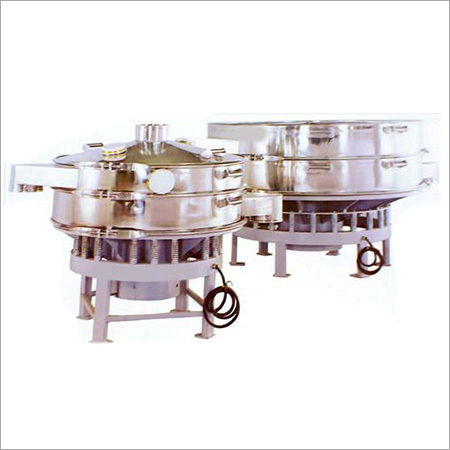
Tell us about your requirement

Price:
Quantity
Select Unit
- 50
- 100
- 200
- 250
- 500
- 1000+
Additional detail
Mobile number
Email

More Products in Vibrating Screen Category
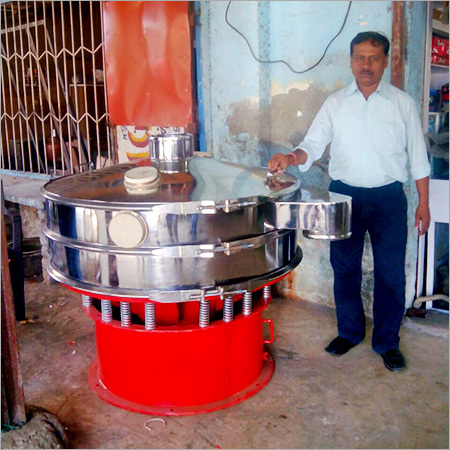
Circular Vibrating Screen
Price Range 100000.00 - 400000.00 INR / Unit
Minimum Order Quantity : 1 Unit
Application : Material Separation, Grading, Screening
Coating Type : Powder Coated
Processing Type : Other, Vibratory
Type : Other, Circular Vibrating Screen
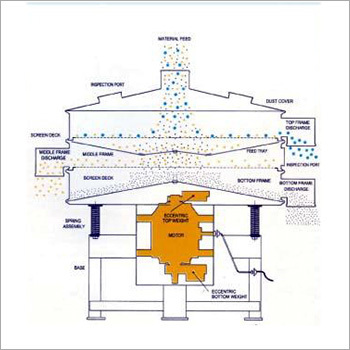
High Frequency Vibrating Screen
Price Range 100000.00 - 400000.00 INR / Unit
Minimum Order Quantity : 1 Unit
Application : Screening, Separation, Grading, Dehydration in Mining, Mineral, Chemical, Food and Pharmaceutical industries
Coating Type : Powder Coated
Processing Type : Other, Automatic
Type : Other, Vibrating Screen
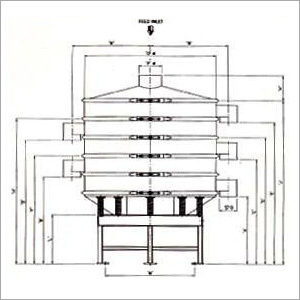
Industrial Vibrating Screen
Price Range 100000.00 - 400000.00 INR / Unit
Minimum Order Quantity : 1 Unit
Application : Industrial Screening, Separation, Sizing
Coating Type : Powder Coated
Processing Type : Other, Vibratory
Type : Other, Vibrating Screen

 Send Inquiry
Our Products

W-175, M.I.D.C., Ph-2, Kalyan-Shil Road, Opp. Galaxy Furniture Hub, Dombivli (E),Dombivli - 421201, Maharashtra, India

Mr. Namdeo Shende
(Proprietor)
Mobile :07971549374
 Send Inquiry
 Send SMS
Developed and Managed by Infocom Network Private Limited.
